Written By: Rtr. Isuri Dewmini
Have you ever wondered why some people are drawn toward violence, while others in the same situation choose peace?
For a long time, the world’s answer to terrorism was simple: wait for a threat to appear, then use force to stop it. But on February 12, we observe a day that flipped that logic on its head.
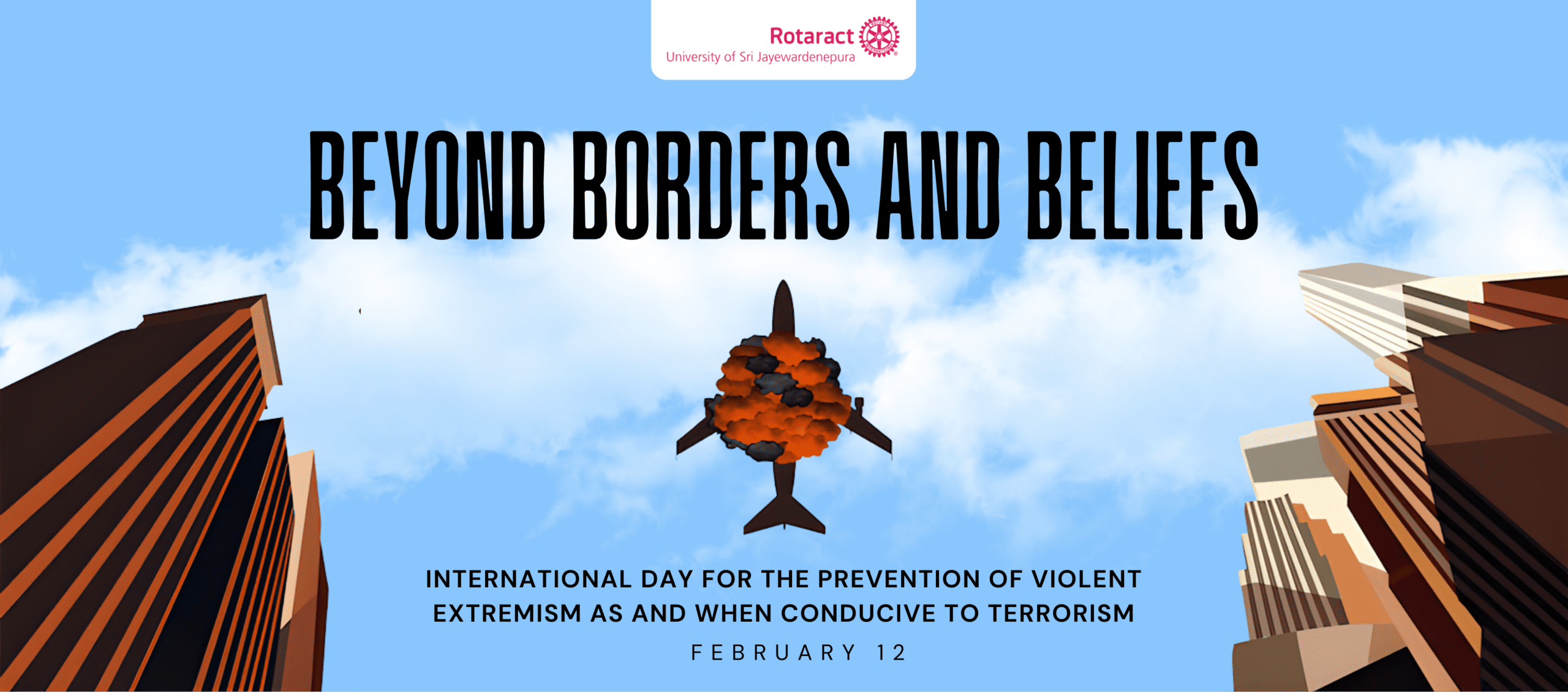
The International Day for the Prevention of Violent Extremism (PVE Day) as and when Conducive to Terrorism is a global reminder that if we want to end terrorism, we have to stop it before it starts.
The Story of February 12: From Bullets to Beliefs
The date isn’t random. It marks a historic turning point in global diplomacy: February 12, 2016: The UN General Assembly adopted a landmark resolution welcoming the Plan of Action to Prevent Violent Extremism.
- The Shift: Before this, “Counter-Terrorism” was the primary focus—think intelligence, arrests, and military action. This plan introduced PVE, a strategy that looks at the “push” and “pull” factors: why people feel marginalized and what makes extremist promises of “belonging” so attractive.
- Official Status: In 2022, the UN formally designated this date to ensure that “prevention” remains a permanent part of the global agenda.
The 2026 Theme: The Digital Frontier
As we observe PVE Day in 2026, the battleground has shifted. Extremists aren’t just in physical shadows; they are in our pockets. This year’s theme, “PVE in the Digital Age,” addresses how modern technology is being used to recruit:
- AI & Deepfakes: Using artificial intelligence to create convincing disinformation and “rage-bait.”
- Gaming Environments: Using the social spaces of online games to target and groom young people.
- Algorithmic Echo Chambers: How unregulated platforms can funnel a curious user toward increasingly radical content.
The “Whole-of-Society” Approach: Who is Involved?
Prevention is too big for any one government. It requires a “Whole-of-Society” approach—meaning every part of our world has a role to play.
- Teachers – Building “mental armor” through critical thinking and media literacy.
- Religious Leaders – Reclaiming the narrative of peace and debunking extremist “theology.”
- Tech Companies – Developing ethical AI that detects harm without stifling free speech.
- Families – Being the first line of defense in spotting changes in behavior or isolation.
- Youth – Leading peer-to-peer programs, since young people listen to each other more than to adults.
Does Prevention Actually Work? (The Stats)
It’s easy to measure a successful arrest, but how do you measure a crime that didn’t happen? Organizations like the Global Community Engagement and Resilience Fund (GCERF) provide a glimpse into the success of the PVE model over the last decade:
- 4 Million+ Individuals: Directly engaged in resilience programs globally.
- Community Ownership: In regions where local “Early Warning” systems were set up, community-reported concerns regarding radicalization rose by over 30%, allowing for social intervention rather than police intervention.
- Education Impact: Youth who participate in “Global Citizenship” education are statistically 60% less likely to engage with extremist content online.
Local PVE organizations with “whole-of-society” approach
In Sri Lanka, the “whole-of-society” approach to preventing violent extremism (PVE) is highly active, with several key organizations working at the grassroots, national, and digital levels.
1. National Peace Council (NPC): Dialogue & Grievance Handling.
2. Helvetas Sri Lanka: Youth & Digital Safety. 3. GCERF (The Global Fund): Jobs & Resilience.
4. CPBR (Centre for Peacebuilding): Healing & Culture.
5. Sarvodaya Shramadana Movement: Community Unity.
How You Can Observe PVE Day 2026
You don’t need to be a diplomat to help. Prevention starts with the way we interact with each other every day:
- Practice “Digital Hygiene”: Before sharing a post that makes you angry, check the source. Extremism thrives on unregulated emotion.
- Mentor Someone: Isolation is the number one recruiter. A sense of belonging to a positive community is the best vaccine against radicalization.
- Learn the Signs: Support local workshops that teach how to have difficult conversations with loved ones who may be drifting toward extremist views.
The goal for 2026 is a future free from terrorism, built not just on stronger walls, but on more inclusive societies.
Graphic Design by: Rtr. Buthma Menali


0 Comments