
Written By: Rtr. Isuri Dewmini
When severe monsoon rains and the recent cyclone battered Sri Lanka, the world watched as rivers burst their banks, displacing thousands of families. The human tragedy was immediate and visible, dominating news headlines. Yet, submerged beneath the rising waters and largely hidden from the initial media glare was another crisis: the desperate plight of the island’s animal population.
The floods served as a stark reminder of a painful reality in disaster management: when catastrophe strikes, animals, both beloved domestic companions and vital wildlife, are often the forgotten victims. However, the recent crisis also illuminated the extraordinary capacity for human compassion, as ordinary citizens, monks, and military personnel rallied to protect those who could not protect themselves.
The Dual Crisis: Livestock and Wildlife
The impact of the deluge was catastrophic for rural livelihoods. In the agricultural districts of Ampara and Batticaloa alone, the devastation was staggering. Reports indicate that over 21,000 cattle and 125,000 poultry were lost to the floodwaters. In one heartbreaking scene in the Eastern Province, rescuers found hundreds of dairy cows that had drowned simply because they were tethered inside barns, unable to swim to safety when the river banks burst overnight.
Simultaneously, the boundary between human and wildlife habitats dissolved, creating dangerous conflicts. As the Nilwala River overflowed, reptiles were flushed into residential zones. In the Verua area, a massive saltwater crocodile washed into a flooded garden, trapping a family inside their home. Unable to evacuate through the waist-deep water due to the predator’s presence, the family had to wait for wildlife officials to launch a specialised operation to capture and relocate the agitated animal.
The Heartbreak: Viral Myths vs. Real Tragedies
One of the most heart-wrenching aspects of the floods was the realisation of how many animals were left behind while the world was distracted. A unique challenge during this disaster was the spread of “feel-good” misinformation.
A video went viral on TikTok, purportedly showing an elephant carrying a dog and a deer to safety. While shared by thousands as a beacon of hope, it was later debunked as an AI-generated video. This highlighted a modern tragedy: while people shared fake heroic stories online, real animals were drowning unnoticed. It forced groups like Embark and Baw Baw to issue urgent pleas for people to focus on real-time action, like donating dry food, rather than sharing fabricated content.
Beacons of Hope: The Unsung Heroes
Yet, amidst the despair, powerful stories of resilience emerged. Before official animal rescue teams could mobilise, everyday Sri Lankans became heroes.
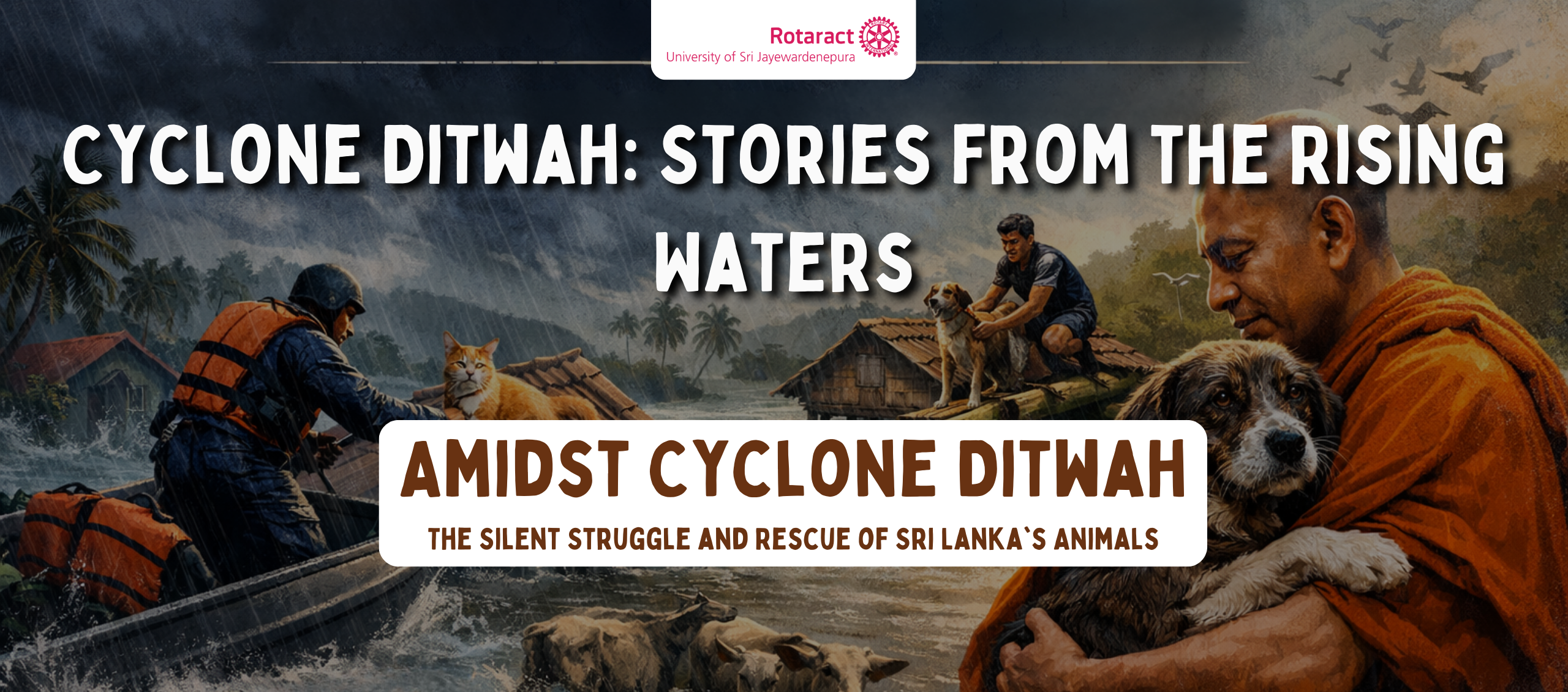
- The “Navy Cat” of Malwana: In a display of compassion transcending protocol, a Sri Lankan Navy boat crew went above and beyond in the highly flood-prone area of Malwana. After evacuating a resident named Mallika Kumari, the crew returned to her submerged house upon hearing her distress about her pet. They spotted her cat clinging to the roof and manoeuvred the boat to rescue the terrified animal, reuniting it with Mallika at the evacuation centre.
- “Lucky” the Roof Dog: In the Gampaha district, a mixed-breed dog, later named “Lucky,” was stranded on a tiled roof for three days without food. He was eventually saved not by professionals, but by local youth using a makeshift raft made of banana tree trunks and inner tubes—an act of bravery that highlighted community resourcefulness.
- The Temple Sanctuary: In Kelaniya, a local Buddhist temple became an unexpected ark. With the temple grounds slightly above the water line, the head monk opened the gates to stray dogs from the entire village. Photographs showed dozens of community dogs sleeping on the dry temple pavilion (Mandapaya), which was fed by the same community kitchen that cooked for human evacuees.
Moving Forward: A Call for Inclusion
The recent floods have receded, but the recovery for the animal population will be long. Shelters are overcrowded, and the threat of post-flood diseases remains high.
The disaster has underscored a critical lesson: animal welfare cannot be an afterthought. Whether it is the farmer in the East wading chest-deep to hold his calves’ heads above water, or the Navy crew in Malwana turning back for a cat, the response showed that the human spirit is willing to defend the vulnerable. Turning that individual compassion into official disaster policy is the only way to ensure that when the waters rise again, the “voiceless victims” are not left behind.
Graphic Design by: Rtr. Buthma Menali


0 Comments