Written By: Rtr. Lakna Elvitigala
“A woman is defined by her independence, strength, and ability to forge her own path without seeking permission or validation.” – Priyanka Chopra-
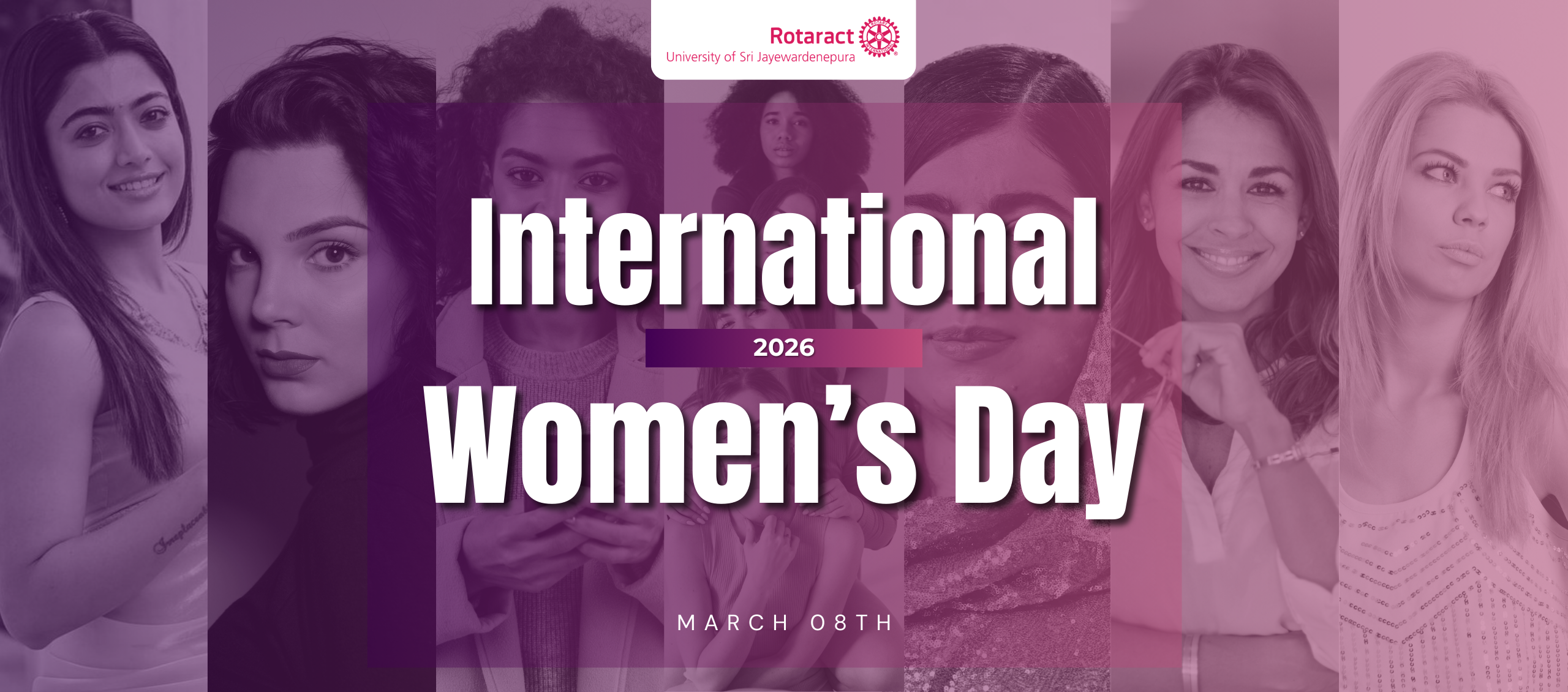
Every year on March 8, the world memorializes International Women’s Day (IWD), a day dedicated to gender equality while celebrating the social, economic, cultural, and political achievements of women. It’s a time to commemorate achievements, draw attention to enduring problems, and inspire action toward a better world for everyone.
This day has been commemorated for more than a century, with the first celebrations taking place in the early 1900s as part of expanding global movements for women’s rights and labor safeguards. Over time, the contributions of many courageous women around the world have shaped the meaning and importance of this day.
Malala Yousafzai is one of the most recognized female icons of the modern era. Malala, a Pakistani activist for girls’ education and the youngest winner of the Nobel Peace Prize, is a symbol of courage and determination. She persisted in her efforts and motivated millions of people worldwide despite being threatened for fighting for girls’ rights to an education. Her story serves as a reminder that one driven girl can have a significant impact on global change. While individuals like Malala inspire global movements, leadership by women can also be seen in different forms across the world, including in political and royal institutions.
Across Europe, a new generation of royal women is preparing to take on leadership roles. These future queens represent modern leadership, education, and responsibility. Princess Leonor, the heir to the Spanish throne, is preparing to become the future Queen of Spain. Princess Elisabeth, the Duchess of Brabant, is expected to be Belgium’s first reigning queen. Princess Ingrid Alexandra of Norway will one day become Norway’s second queen regnant. These young leaders represent a future where women stand at the highest levels of leadership and governance. Similarly, inspiring examples of women’s leadership can also be found in Sri Lanka.
Outstanding examples of female leadership can also be found in Sri Lanka. Sirimavo Bandaranaike, the first female prime minister in history, is a remarkable personality. In addition to revolutionizing Sri Lankan politics, her leadership demonstrated that strong, intelligent women could govern entire countries. In South Asia, she represented the empowerment of women. Beyond politics, women have also made remarkable contributions in business and innovation across the world.
In the modern world, many women are transforming industries through entrepreneurship. For example, Whitney Wolfe Herd, the founder of the dating app “Bumble”, created a platform designed to empower women in online relationships. Anne Wojcicki, the co-founder of “23andMe,” revolutionized personal genetic testing and health awareness. Sri Lanka also has inspiring female entrepreneurs such as Otara Gunewardene, the founder of ODEL, who built one of the country’s most successful fashion retail brands and later became an advocate for wildlife conservation. However, women’s contributions are not limited to leadership positions or entrepreneurship alone. Many women also play vital roles in preserving culture and traditional industries in Sri Lanka.
Beyond politics and business, many Sri Lankan women contribute to the country’s cultural and traditional industries. Across rural communities, women are involved in weaving traditional handmade mats, handloom textile production, pottery and handicrafts, and traditional food processing. These women preserve centuries-old traditions while supporting their families and local economies. Their work reflects creativity, resilience, and cultural pride. Therefore, recognizing and empowering women in every field becomes essential.
When talking about this year, the campaign theme for International Women’s Day 2026 is “Give to Gain.” This theme highlights the idea that when societies invest in women through education, opportunities, mentorship, and support, everyone benefits. Empowering women leads to stronger economies, healthier communities, and a more equal world. On this day, many different activities are organized in different countries, such as conferences and panel discussions on gender equality, leadership workshops and mentorship programs, cultural performances celebrating women’s achievements, campaigns supporting women-owned businesses, educational programs in schools and universities, etc.
Thus, from global activists like Malala, to future queens of Europe, to Sri Lankan leaders, entrepreneurs, and cultural workers, women everywhere continue to shape our world. International Women’s Day reminds us that empowering women is not only about fairness it is about building a better future for all.
When women rise, societies rise with them.
Graphic Design by: Rtr. Buthma Menali


0 Comments