
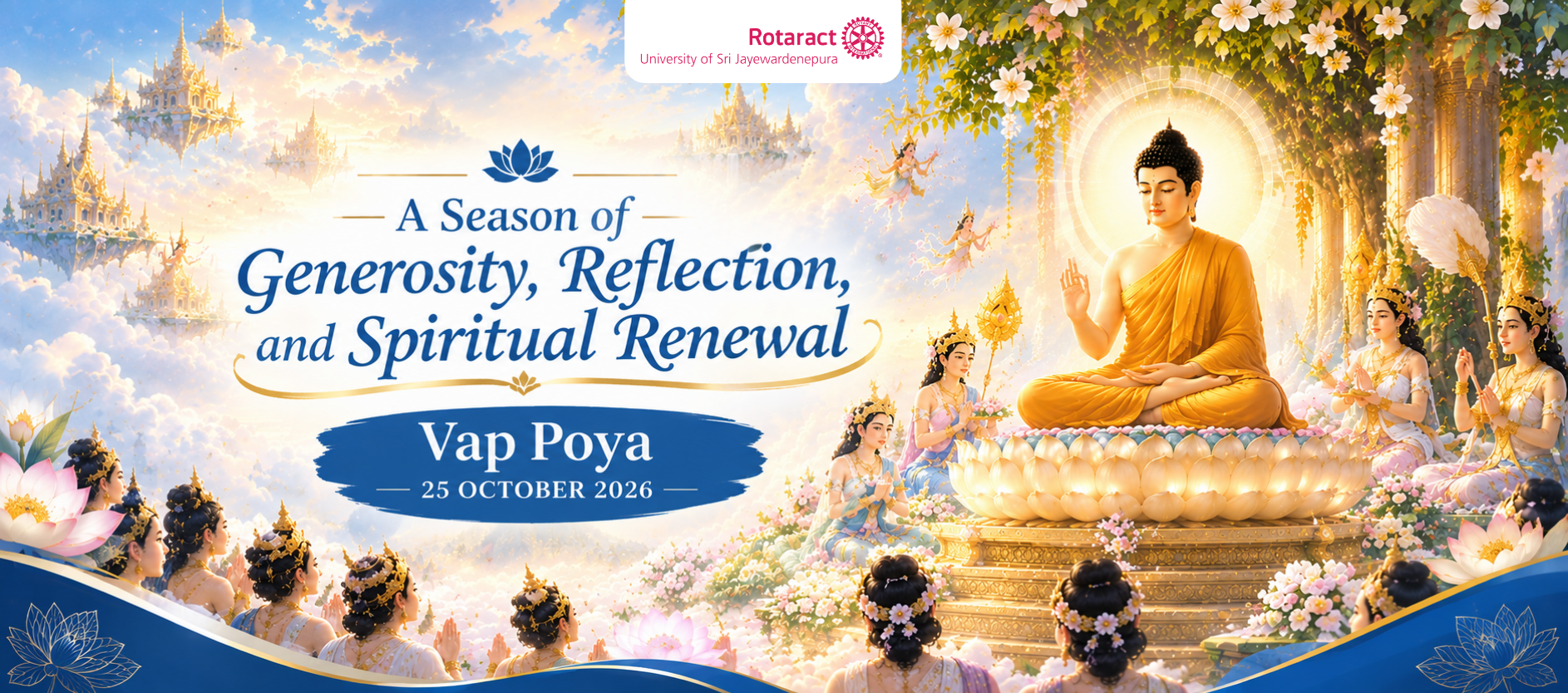
Vap Poya – 25 October 2026
Written by: Rtr. Vinodya Herath
Every full moon in the Buddhist calendar carries a story of faith, wisdom, and spiritual awakening. Among these sacred observances, Vap Full Moon Poya Day holds a special place in Sri Lankan Buddhist culture. Traditionally observed in October, Vap Poya marks the conclusion of the three month Vassana season, during which Buddhist monks dedicate themselves to meditation, Dhamma study, and spiritual discipline. It also heralds the beginning of the cherished Katina season, a time when generosity, gratitude, and devotion unite Buddhist communities across the island.
In 2026, Vap Full Moon Poya Day falls on 25 October, offering devotees an opportunity to reflect on the Buddha’s teachings and rediscover the importance of generosity, mindfulness, and spiritual growth.
The Completion of Vassana: A Sacred Journey of Discipline
The significance of Vap Poya is closely connected with the Vassana season, traditionally known as the rainy season retreat. During this three month period, beginning after Esala Poya, Buddhist monks remain at their designated monasteries and devote themselves to religious practice, meditation, studying the Dhamma, and teaching the community.
This tradition has deep roots in the time of the Buddha, when travelling during the rainy season could cause difficulties and unintentionally harm small living creatures. The retreat therefore provided an opportunity for monks to remain in one place, strengthen their spiritual practice, and deepen their understanding of the Dhamma.
Throughout this period, lay devotees support the Sangha by offering food, medicine, robes, and other necessities. In return, temples become places of learning, reflection, and spiritual connection. Vap Poya marks the traditional conclusion of this retreat, celebrating the dedication of the monastic community and the shared commitment of devotees to the Buddhist way of life.
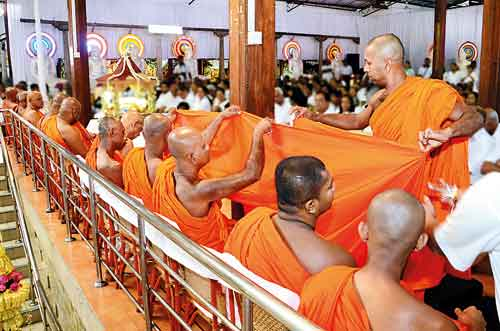
More than the end of a religious observance, it reminds us that meaningful progress requires patience, discipline, and a willingness to devote time to personal development.
The Buddha’s Heavenly Sermon: Wisdom Beyond Worlds
Vap Poya is also traditionally associated with a significant event in the Buddha’s life: his seventh Vassana retreat, during which he is believed to have visited Tavatimsa Heaven to teach the Abhidhamma to celestial beings, including his mother, who had been reborn in the heavenly realm.
According to Buddhist tradition, the Buddha spent this period expounding the Abhidhamma, a profound analysis of mental processes, consciousness, and the nature of existence. These teachings are particularly significant because they offer a deeper understanding of the mind and the conditions that shape human experience.
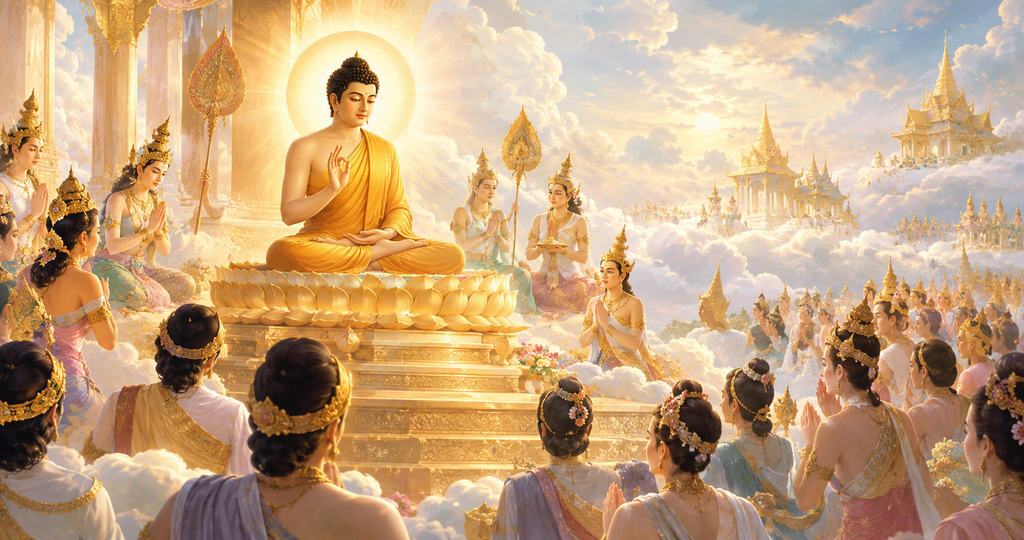
After completing this period of teaching, the Buddha is traditionally believed to have descended to the human world at Sankassa. This event is remembered in Buddhist tradition as a remarkable occasion connecting the heavenly and human realms through the wisdom of the Dhamma.
The story carries a timeless message: wisdom is not merely something to be heard or remembered; it is something to be understood, reflected upon, and practised. By learning to understand our thoughts, emotions, and actions, we can gradually develop greater awareness, compassion, and inner peace.
Katina Cheevara Pooja: The Beauty of Selfless Giving
One of the most significant traditions associated with Vap Poya is the Katina Cheevara Pooja, a special robe offering ceremony held in Buddhist temples following the completion of the Vassana retreat.
The Katina tradition is rooted in the Buddha’s time. Buddhist accounts describe a group of monks who experienced difficulties travelling during the rainy season and arrived in the Buddha’s presence with their robes affected by the journey. In response to the needs of the monastic community, the Buddha established provisions concerning the offering of robes.
Over time, Katina Cheevara Pooja developed into one of the most cherished annual religious observances in Theravada Buddhist communities, including Sri Lanka.
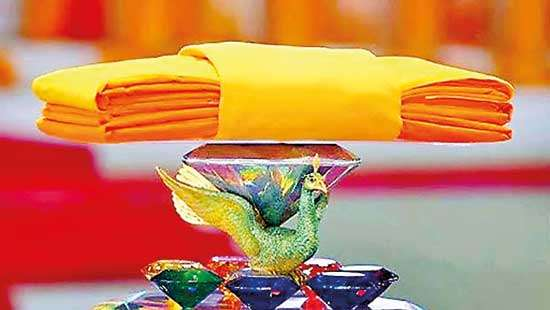
During the Katina season, devotees organise religious ceremonies and processions to bring the Katina robe to the temple. The robe is then formally offered to a qualified monk who has completed the Vassana retreat in accordance with the relevant monastic discipline.
However, the deeper significance of Katina lies beyond the robe itself. It represents generosity without expectation, gratitude for the guidance of the Sangha, and the willingness of a community to work together for a meaningful purpose.
From preparing offerings to organising processions and supporting temple activities, many people contribute their time and effort. These collective acts strengthen relationships, encourage cooperation, and remind us that even a simple act of giving can carry profound meaning when offered with a sincere heart.
The Month of Robes: A Community United by Faith
The period following Vap Poya is traditionally known as the Katina season, or the month of robes. It continues until Ill Full Moon Poya Day, during which many Buddhist temples conduct their annual Katina ceremonies.
Across Sri Lanka, temples become centres of devotion as families, community organisations, and devotees come together to participate in these religious observances. Katina processions, religious chanting, Dana offerings, and other meritorious activities reflect the enduring relationship between the Sangha and the lay community.
The significance of this season extends beyond religious rituals. It demonstrates how a shared spiritual purpose can bring people together, regardless of their social backgrounds or personal circumstances.
Furthermore, the Katina tradition teaches the value of collective responsibility. Every contribution, whether large or small, becomes part of a shared effort to support religious practice and preserve a cultural heritage passed down through generations.
In a world where individual success often receives the greatest attention, the Katina season reminds us of the beauty of community, cooperation, and giving without seeking recognition.
A Chapter in Sri Lanka’s Buddhist Heritage
Vap Poya also holds significance in the historical traditions associated with the spread and development of Buddhism in Sri Lanka.
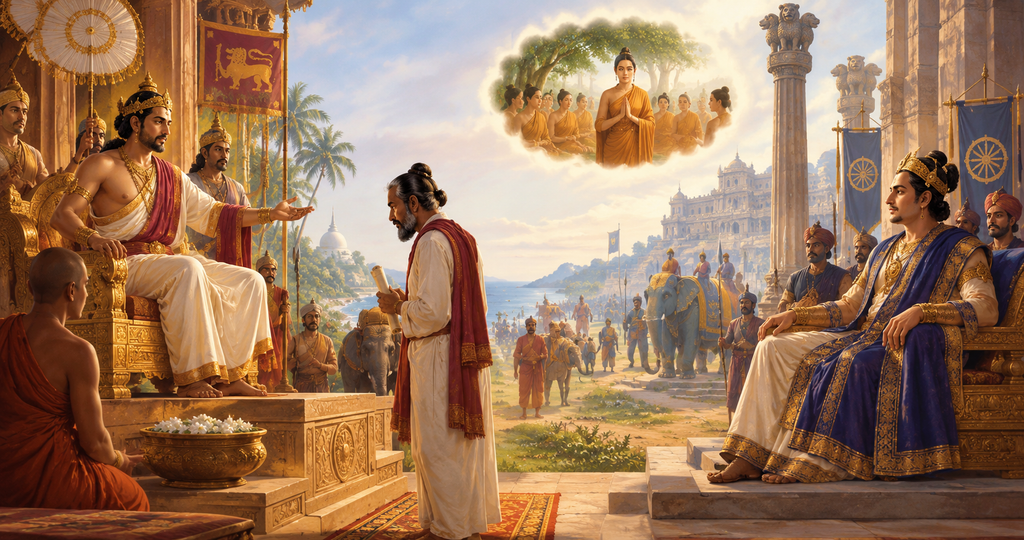
Buddhist historical accounts associate this period with King Devanampiyatissa’s decision to send his minister, Arittha, to Emperor Asoka in India with a request connected to the establishment of the Bhikkhuni Order in Sri Lanka. This mission forms part of the broader historical narrative that led to the arrival of Arahant Sanghamitta Theri and the establishment of the Bhikkhuni Sasana on the island.
The tradition is especially meaningful because it reflects the close historical and religious connections between Sri Lanka and India during the early development of Buddhism on the island.
It also highlights the importance of religious learning, cultural exchange, and the contribution of women to Buddhist history. Through such traditions, Vap Poya provides an opportunity to appreciate not only the spiritual teachings of Buddhism but also the historical events that have shaped Sri Lanka’s religious identity.
These accounts remind us that preserving cultural heritage depends on understanding the past while continuing to practise the values that give it meaning in the present.
A Day to Pause, Reflect, and Practise the Dhamma
Like other Full Moon Poya Days, Vap Poya offers Buddhists an opportunity to step away from everyday distractions and focus on spiritual development.
Devotees may visit temples, observe Sil, meditate, listen to Dhamma sermons, participate in Bodhi Pooja, engage in acts of charity, and offer Dana to the Sangha. Families may also spend time together reflecting on Buddhist teachings and encouraging one another to practise kindness and mindfulness in daily life.
Yet, the true value of Poya Day lies not only in attending religious ceremonies but also in applying the Dhamma to our thoughts, words, and actions.
Can we practise patience when faced with difficulties? Can we give without expecting something in return? Can we respond to others with understanding rather than anger? Can we recognise the difference between temporary happiness and lasting inner peace?
These are questions worth reflecting upon during Vap Poya.
The teachings associated with this sacred day encourage us to cultivate generosity, discipline, wisdom, and compassion, not merely as religious ideals, but as practical principles that can guide our everyday lives.
The Message That Remains: Giving, Growing, and Finding Inner Peace
Vap Full Moon Poya Day is more than a marker on the Buddhist calendar. It represents the completion of a period of spiritual dedication, the continuation of a treasured tradition of generosity, and an invitation to deepen our understanding of the Dhamma.
The Vassana retreat teaches us the importance of discipline and reflection. The Katina tradition demonstrates the beauty of selfless giving. The Buddha’s teachings remind us of the value of wisdom and the importance of understanding the mind. Together, these traditions offer lessons that remain relevant far beyond the boundaries of a single religious observance.
In our fast moving world, where people are often occupied with responsibilities, ambitions, and distractions, Vap Poya encourages us to pause and reconnect with what truly matters. It reminds us that spiritual growth begins with small, consistent efforts: a kind word, a generous act, a moment of mindfulness, or the willingness to understand another person’s perspective.
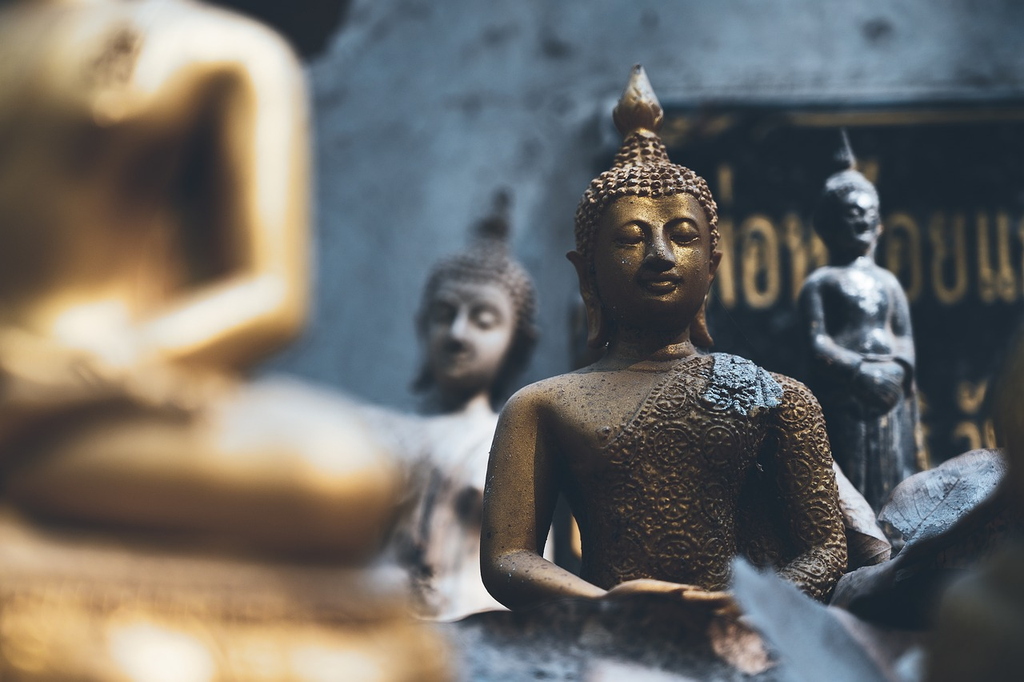
Ultimately, the light of Vap Poya is not limited to the full moon illuminating the night sky. Its deeper light lives in the wisdom we cultivate, the kindness we extend, and the generosity we practise.
“May the sacred light of Vap Poya inspire us to give with kindness, live with mindfulness, and walk the path of wisdom and compassion, not only on this Poya Day, but throughout our lives.”
Graphic Designed by: Rtr. Nethmi Tharushika


0 Comments