
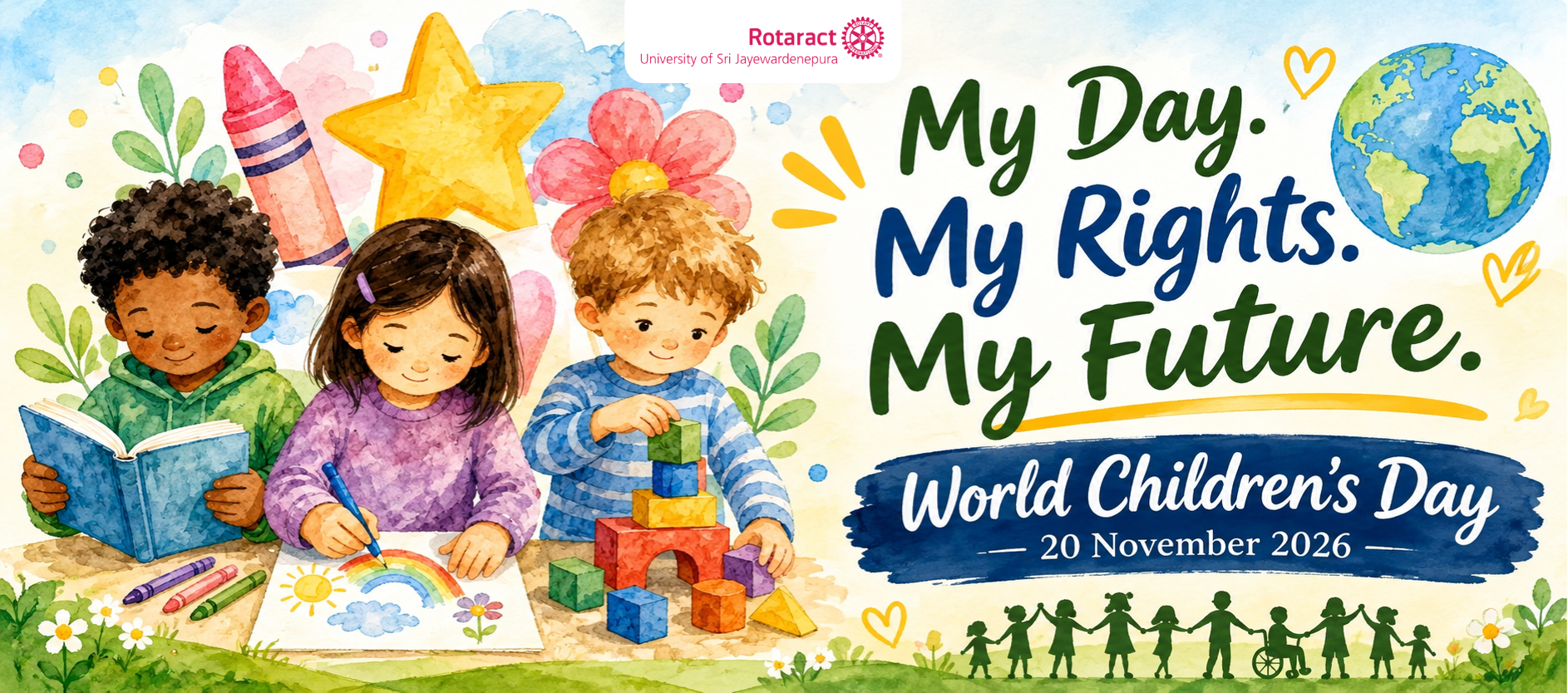
World Children’s Day – 20 November 2026
Written by: Rtr. Sanduni Malsha
Every year on 20 November, the world turns blue for its youngest citizens. Schools light up, children take over newsrooms, parliaments, and social media, and adults are reminded of a simple but powerful promise: every child has rights, not just needs. World Children’s Day is not simply a celebration. It is UNICEF’s global day of action for children, by children – a day to listen to children, celebrate their potential, and demand a better future for every child (UNICEF, 2024).
The date, 20 November, was not chosen by accident. On 20 November 1959, the United Nations General Assembly adopted the Declaration of the Rights of the Child. Exactly thirty years later, on 20 November 1989, the same Assembly adopted the Convention on the Rights of the Child (UNCRC). That Convention, with 54 articles, became the most widely ratified human rights treaty in history, with 196 countries now party to it (United Nations, 1989). It defines a child as every human being below the age of 18 and recognises children not as the property of adults, but as independent holders of rights.
What Rights Do Children Have?
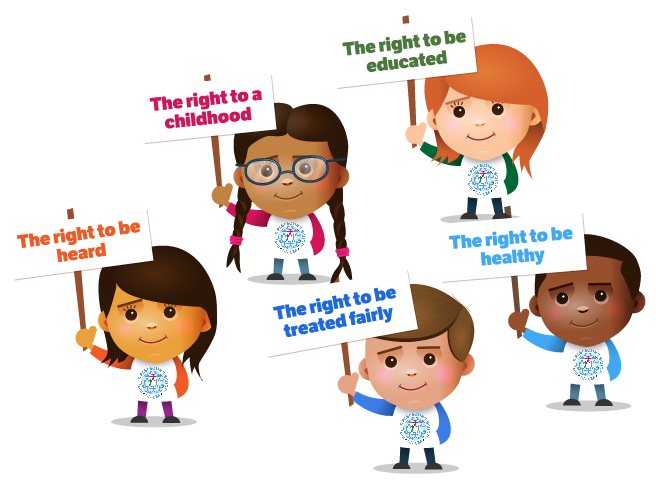
The Convention is built on four core principles. First, non-discrimination: every child has rights, regardless of race, religion, gender, disability, or background. Second, the best interests of the child must be a primary consideration in all decisions affecting them. Third, every child has the right to life, survival, and development. Fourth, children have the right to express their views and to be heard (UNICEF, 2023).
In everyday life, this means having the right to a name, a family, healthcare, nutritious food, clean water, education, play, and protection from violence, abuse, exploitation, and child labour. Children’s rights are not about giving children everything they want. They are about giving them everything they need to grow up safe, healthy, and confident.
Why Does This Day Still Matter?
More than 35 years after the Convention was adopted, millions of children are still denied their basic rights. Around 160 million children worldwide are still engaged in child labour, and millions are out of school, especially girls, children with disabilities, and children living in conflict zones (International, 2024). Many children face malnutrition, mental health challenges, online abuse, climate disasters, and violence at home and at school. The COVID-19 pandemic also widened the gap between children who have opportunities and those who do not.
In Sri Lanka, too, the challenges are real. While Sri Lanka has achieved high literacy and strong child health indicators, children still face poverty, unequal access to quality education, child abuse, and the effects of the economic crisis on nutrition and mental well-being (UNICEF Sri Lanka, 2024). World Children’s Day reminds us that progress is not enough if it does not reach every child. Inclusion must be for every child – not only for the privileged, not only for the healthy, and not only for the loudest.
That is why the theme for World Children’s Day 2026, ‘My Day. My Rights. My Future.’, is so powerful. It puts children at the centre. It says: this is not a day about children; it is a day with children. Children are not just future adults. They are citizens today, with ideas, dreams, fears, and solutions. When we allow children to speak about climate change, school, online safety, or mental health, we often discover that they understand the problems better than we do – because they experience them every day.
Children in a Digital World
Today’s children are growing up in a world their parents never knew. They learn, play, and make friends online. The digital world offers incredible opportunities, but it also brings new risks: cyberbullying, misinformation, addiction, and exploitation. Protecting children today therefore means protecting them both offline and online. It means teaching digital literacy, encouraging kindness online, and creating safe spaces where children can ask for help without fear or shame. A child’s feeling is data. A child’s voice is evidence.
What Can We Do?
World Children’s Day is a call to action for all of us. First, listen. Ask a child what they need, what they dream of, and what worries them – and truly listen. Second, learn. Read the child-friendly version of the Convention and share it with others. Third, speak up. If we see bullying, discrimination, or abuse, we must not stay silent. Fourth, act. Volunteer, mentor, tutor, or organise a small awareness programme in our school, university, or village.
Institutions also have a role to play in shaping a better future for every child. Schools should create supportive and inclusive learning spaces. Hospitals must offer compassionate and child-friendly care. Governments need to put children’s nutrition, education, mental well-being, and protection at the top of their priorities. They must also ensure that young voices are heard in decisions that shape children’s lives.
Building a just and sustainable society starts with protecting every child’s dignity, equality, and opportunities. Children are not just the future of our society; they are a crucial part of our present. Their rights, voices, and dreams must never be ignored.
Graphic Designed by: Rtr. Nethmi Tharushika


0 Comments