
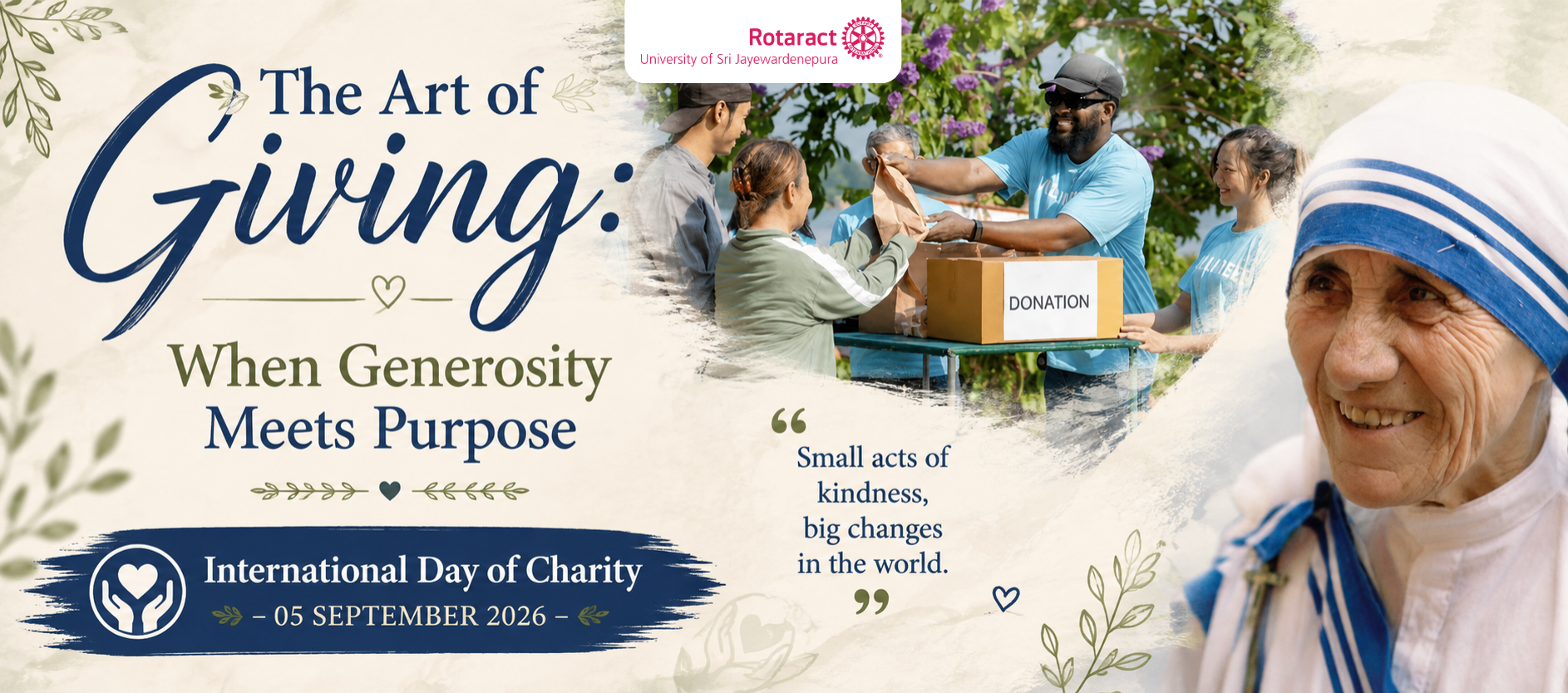
International Day of Charity – 05 September 2026
Written by: Rtr. D.D.S.I. Denawaka
Is Giving Always Helpful? Rethinking Charity in a World That Needs It

We rarely question the act of giving.
Someone needs help, so we give. A fundraiser appears on social media, so we donate. A charity asks for support, and we share the campaign. It feels simple: someone has a need, someone has something to give, and generosity connects the two.
But there is a question worth asking this International Day of Charity: Is giving always helpful?
The answer is not simply yes or no. Giving can provide food to families facing hardship, support education, contribute to medical care, help communities recover from disasters, and create opportunities for people who have been denied them. At the same time, a donation made without understanding where it goes may have limited impact, and poorly planned assistance can sometimes create unintended consequences.
The purpose of asking this question is therefore not to discourage generosity. It is to make us think more carefully about it.
The United Nations observes the International Day of Charity every year on September 5. The day was established to raise awareness of the importance of charitable activity, philanthropy, and volunteering, and September 5 was chosen in recognition of Mother Teresa, who died on that date in 1997.
Charity has always been closely connected to the human instinct to respond to suffering. Long before online fundraising platforms existed, people supported one another through communities, religious institutions, local organisations, and personal acts of generosity. Today, technology has simply changed the scale and speed at which that generosity can move.
The numbers are remarkable. According to the Charities Aid Foundation’s World Giving Index 2024, around 4.3 billion people worldwide had helped a stranger, volunteered their time, or donated money during the period measured. That represents an enormous amount of generosity taking place across different cultures, countries, and communities.
Giving is also much broader than handing over money. It can mean donating food or essential items, volunteering time, sharing professional skills, supporting a community project, organising a fundraiser, or using one’s voice to bring attention to an issue. Philanthropy can involve sustained efforts to address social, environmental, and economic problems rather than simply responding to an immediate need.
Fundraising has become an important part of this landscape. Social media allows a local cause to reach people far beyond its immediate community, while digital payment systems make it possible to contribute within seconds. A campaign can move from an unknown local issue to a widely supported cause almost overnight.
GivingTuesday’s 2025 data illustrate the scale of modern generosity. The movement reported approximately 38.1 million participants in the United States and around $4 billion in donations, alongside millions of people who contributed through volunteering, donating goods, and advocating for causes. These figures show that generosity is not disappearing in a digital world. In many ways, it is finding new ways to express itself.
Yet the speed of modern fundraising also creates a challenge: we can sometimes make decisions faster than we can understand the problem.
Emotional stories are powerful. Research on charitable giving has found that information about identifiable people and tangible outcomes can influence people’s willingness to donate. A personal story can make an otherwise distant issue feel immediate and human. That emotional connection can be valuable because many social problems are difficult to understand through statistics alone. Emotion, however, should ideally lead to informed action rather than replace it.

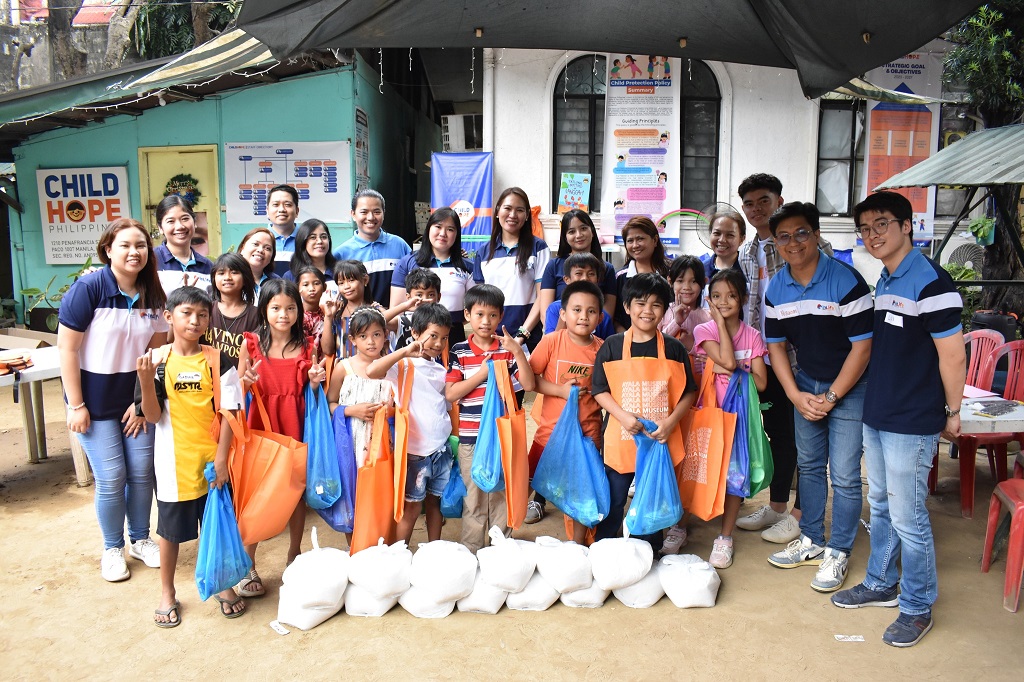

A compelling photograph or heartbreaking story can attract attention, but attention does not tell us whether a fundraiser is legitimate, whether the money will reach the intended beneficiaries, or whether the proposed solution is appropriate for the situation. This is particularly important online, where information can spread widely before it has been properly verified.
That is why responsible giving matters.
Before donating, it is worth checking who is behind a campaign, what the money will be used for, and whether there is enough information to understand how the organisation operates. Established organisations may provide financial reports, programme information, and updates about the outcomes of their work. When donating through an unfamiliar fundraiser, asking basic questions about the purpose and destination of the funds can be a simple but valuable step.
This does not mean that every donation needs to become a complicated research project. Nor does it mean that uncertainty should prevent people from helping. In emergencies, speed can be critical.
During floods, cyclones, landslides, and other disasters, communities may suddenly need food, clean water, shelter, healthcare, and other essentials. In these circumstances, timely donations can provide immediate relief when people need it most. Organisations working on the ground are often better positioned to identify urgent needs and distribute resources efficiently.
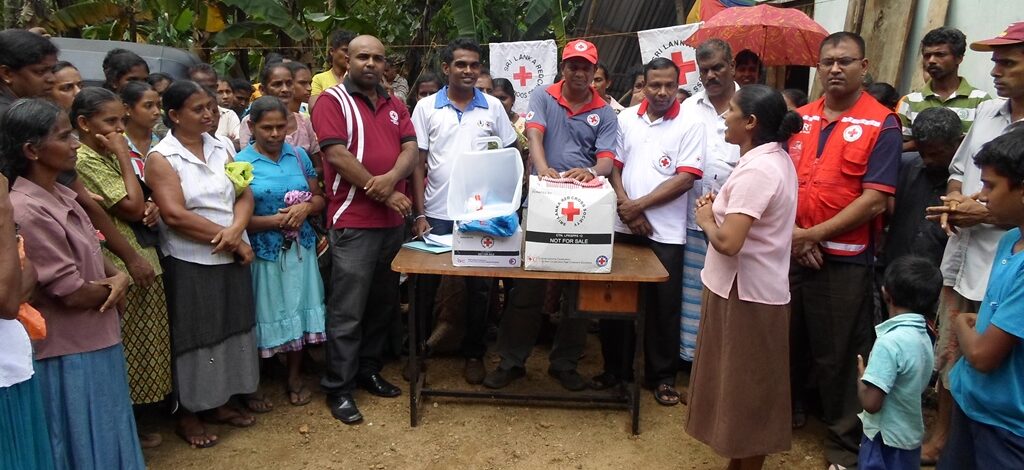
Sri Lanka has experienced this reality repeatedly. Humanitarian organisations and community groups have played important roles in responding to disasters and supporting affected communities. The Sri Lanka Red Cross Society, for example, works with volunteers and communities in areas including disaster response, health, and water, sanitation, and hygiene.
But the need does not always end when the emergency does.
Recovery can take months or years. Homes need to be rebuilt, livelihoods restored, and communities strengthened. This is where longer-term philanthropy becomes particularly important. Supporting education, skills development, healthcare, environmental protection, and community resilience may not produce the immediate emotional impact of an emergency appeal, but these areas can contribute to lasting improvements in people’s lives.
This is also where the difference between charity and philanthropy becomes useful. Charity often responds to an immediate need, while philanthropy can take a longer-term approach to addressing the causes and systems behind social problems. Both have value. Immediate relief can protect people from suffering today, while long-term investment can help reduce the likelihood of the same problems continuing tomorrow.
Neither approach must compete with the other.
The same principle applies to fundraising. A successful fundraiser does not necessarily have to be large or spectacular. University communities, workplaces, and local groups can raise support through sponsored walks, charity sales, skill-based events, community clean-ups, book or clothing drives, and partnerships with local businesses. Digital fundraising can also allow small contributions from many people to become meaningful collective support.
The important factor is not always the amount raised. It is whether the effort creates genuine value.
There is another side of giving that is sometimes overlooked: what it does for communities themselves.
Volunteering and fundraising can bring people together around a shared purpose. They can create relationships between people who might otherwise never interact and encourage a stronger sense of civic responsibility. For young people especially, involvement in charitable activities can provide opportunities to develop leadership, teamwork, communication, and organisational skills while contributing to a cause beyond themselves.
Giving can therefore benefit both sides of the relationship. The person receiving support gains resources or opportunities, while the person giving may gain a deeper understanding of their community and a stronger connection to other people.
Still, generosity should not be measured only by how good it feels to give.
There is a difference between giving because something is emotionally compelling and giving because we understand what is needed. Sometimes those motivations overlap. Sometimes they do not. The most meaningful approach is to allow compassion to open the door, while information helps decide what to do next.
This is particularly relevant in Sri Lanka, where NGOs and voluntary organisations operate within a formal regulatory framework. The National Secretariat for NGOs oversees registration and supervision under the Voluntary Social Service Organizations (Registration and Supervision) Act No. 31 of 1980. Registered organisations are expected to maintain financial and organisational records, making transparency an important consideration for people deciding where to direct their support.
But responsible giving should never become an excuse for doing nothing.
There is no perfect donation, perfect charity, or perfect way to solve a social problem. Sometimes people become so concerned about finding the most effective possible option that they hesitate to contribute at all. The reality is that communities often need both immediate assistance and long-term commitment.
What matters is developing a habit of thoughtful generosity.
That could mean giving a small amount regularly instead of donating only when a crisis becomes visible. It could mean volunteering skills instead of money. It could mean supporting a local organisation whose work you understand. It could mean donating essential items when they are specifically requested rather than assuming what people need. It could simply mean taking a few minutes to verify a fundraising appeal before sharing it with hundreds of others.
Charity should not be reduced to a single day, a viral post, or a moment of sympathy.
International Day of Charity is an opportunity to recognise something much bigger: the willingness of ordinary people to contribute to the wellbeing of others. The scale of global giving shows that generosity remains a powerful part of human society. The challenge is to make that generosity as meaningful and responsible as possible.
So, is giving always helpful?
Not automatically.
But that does not make giving less important. It makes how we give important.
A donation can provide immediate relief. A fundraiser can mobilise an entire community. A volunteer can contribute skills that an organisation desperately needs. A long-term philanthropic investment can address problems that emergency assistance alone cannot solve.
The world does not need less generosity. It needs generosity that is thoughtful enough to understand the problem, compassionate enough to respond to it, and responsible enough to consider what happens after the money changes hands.

This International Day of Charity, perhaps the question should not only be, “How much can I give?”
It should also be, “How can I make my giving genuinely useful?”
Because giving has the power to change lives.
And when compassion is combined with understanding, that power can go much further.
Graphic Designed by: Rtr. Nethmi Tharushika


0 Comments