
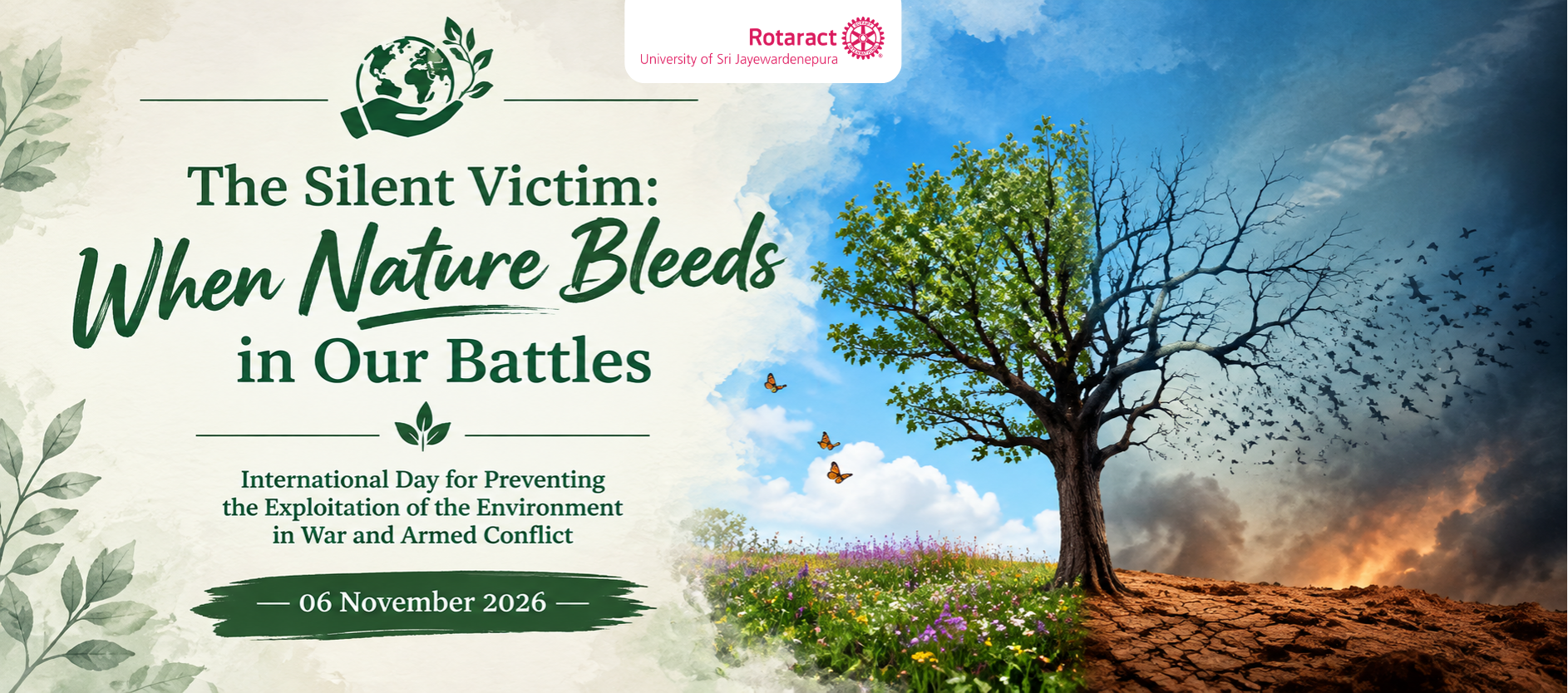
International Day for Preventing the Exploitation of the Environment in War and Armed Conflict – 06 November 2026
Written by: Rtr. Bhagya Mendis
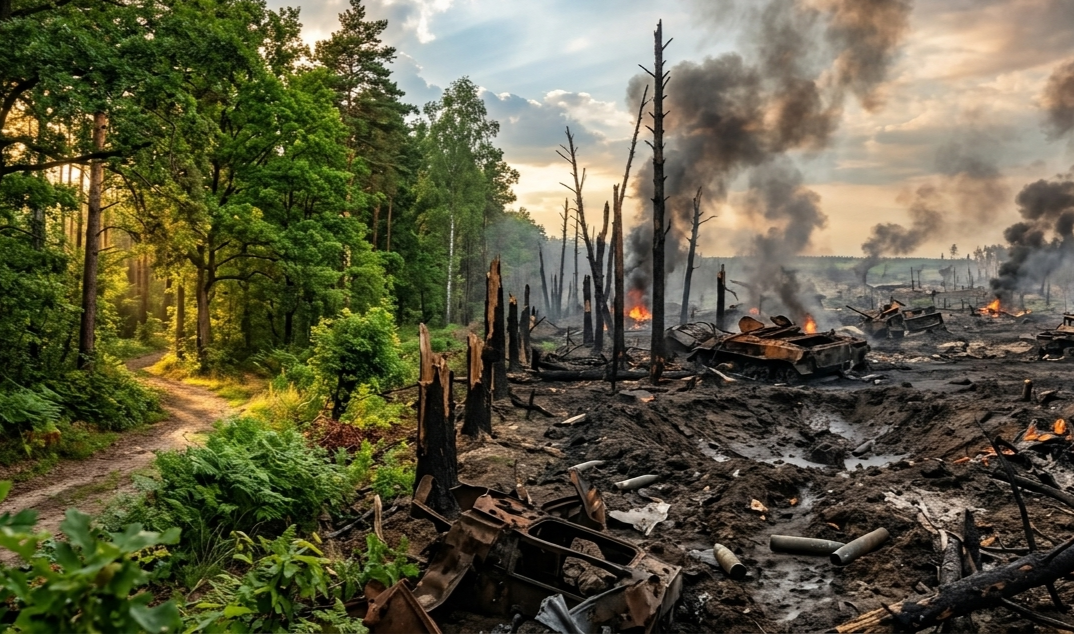
When war breaks out, we naturally worry about people. It makes sense. We see their pain. But we often forget who else suffers.
Nature.
Nature cannot scream for help. Think about a quiet forest. You take a deep breath, and everything feels safe. Then, out of nowhere, a bomb drops. Trees that stood there for hundreds of years? Gone in seconds. Turned to ash. The air fills with toxic smoke.
Eventually, the shooting stops. The war ends. But the land stays poisoned. Long after people try to move on, the earth is left carrying that damage.
The United Nations recognised this silent suffering and established a special day to make us stop and think: November 6. It is a day focused on protecting the environment during wars and armed conflicts.
Why do people even fight? The numbers are actually shocking. Over the last 60 years, almost half of all wars within countries have been linked to natural resources. People fight to control things like water, land, or oil. (Source: UNEP, 2009, “From Conflict to Peacebuilding” Report).
We all want lasting peace. But here is the hard truth: we can never have real peace if we destroy the very earth we live on. If the rivers are dead and the land is ruined, how will people survive?
That is what this day is all about. It reminds us that we have to protect our planet, not just on normal days, but especially when war is happening.
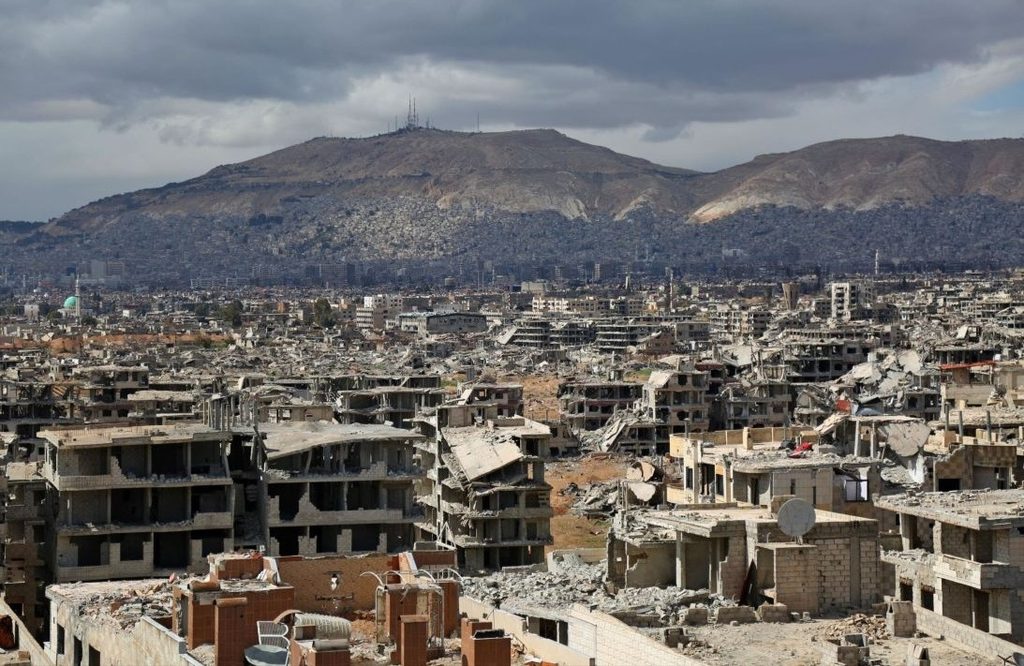
We do not even have to look at history books to see this. It is happening right now.
Look at Ukraine. Good farming land is now full of landmines. Instead of growing food, the soil hides deadly traps. And remember the broken dams? All that floodwater washed harmful chemicals into the Black Sea.
It is the same story in the Middle East. Bombs keep falling, turning whole areas into toxic dust. Ancient olive trees are lost. The air is thick with smoke, and clean water is severely affected.
Wars today are doing so much damage. Yes, people are hurting. But the earth is breaking right along with them.
The damage wars do to the environment does not simply disappear. Armies sometimes burn crops, cut down forests, and poison water wells just to hurt the enemy. This can ruin the soil for decades, leaving people to deal with long term hunger. On top of that, bombs and heavy weapons can leave behind dangerous chemicals that sink into the ground and contaminate water sources. Because of this, communities can face health and environmental consequences long after the fighting stops.
Animals get caught right in the middle of it all, too. Their habitats are destroyed by bombs, while landmines can kill wildlife and push vulnerable species closer to extinction. Sadly, many conflicts are also prolonged by the desire to control valuable resources such as timber, gold, or oil. These resources can be exploited to finance further violence, leaving the environment severely damaged.
When a war is happening far away, it is easy to feel completely helpless. But as global citizens, we are not. Even if we are safe at home, we can still do things that matter.
We can simply talk about this. We can share stories on social media to show others how nature is suffering. We can also support organisations that clear landmines or help restore damaged environments after a war ends. And honestly, practising sustainable living makes a difference. If we stop wasting resources such as oil and fuel, the very things people often fight over, we can help reduce the pressure that contributes to these conflicts.
We also need to teach children to care for the planet. Because if we learn to value the earth, perhaps one day people will not have to fight over what is left.
Maybe it all starts with changing how we see the world.
We usually think peace simply means that people are not fighting each other. But that is only part of it. Real peace means finally being kind to the earth, too.
We fight so hard for human rights. We need to fight for nature, too.
Protecting the environment during a war is not just about rescuing trees or animals. It is literally about saving ourselves. Without a healthy earth, we have no future.
People might forget old wars, and history books eventually move on. But the land does not forget. It carries the damage.
We have to be the ones who speak up for nature. Because if we do not protect the earth, it will not be able to protect us.
“At the end of the day, when the fighting finally stops, the earth is all we have left. We cannot keep tearing it apart. Because if the land gives up, nobody wins.”
Graphic Designed by: Rtr. Nethmi Tharushika


0 Comments