
Written By: Rtr. Sanithi Jayasinghe
Introduction
Our Power, Our Planet!
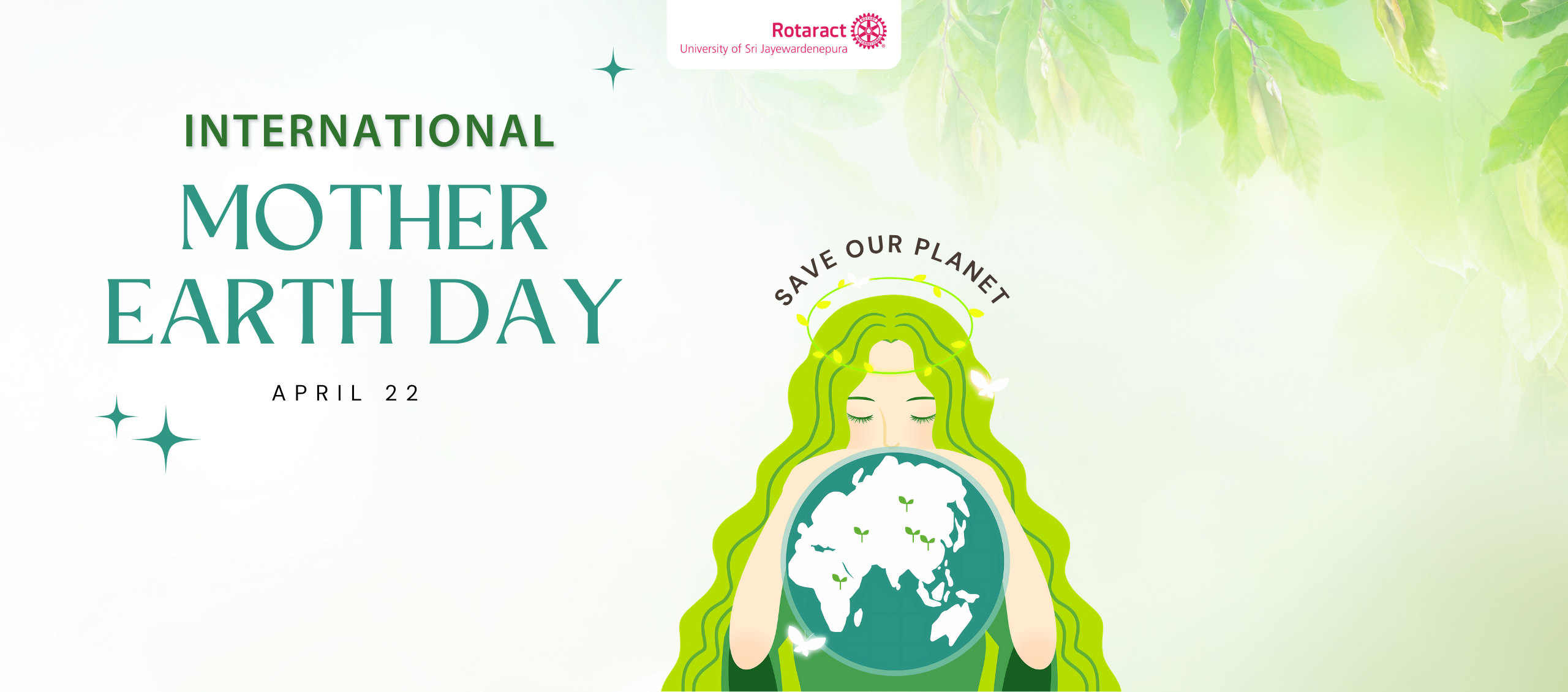
Every year on 22 April, the world pauses to honor International Mother Earth Day; a global reminder that our planet is not just a resource, but the very source of life itself. In 2026, this observance arrives at a critical moment. With the official theme “Our Power, Our Planet,” the day calls on every individual, community, and nation to recognize that the power to protect our environment lies not solely with governments or institutions, but with us, the people. This year’s message is clear: environmental progress depends on collective human action, renewable energy transitions, and the refusal to let political uncertainty stall the fight for a sustainable future.
The Origin and Significance of International Mother Earth Day
Proclaimed by the United Nations General Assembly in 2009, International Mother Earth Day builds on the legacy of the first Earth Day in 1970, which mobilized 20 million Americans and ignited the modern environmental movement. Today, more than one billion people across 193 countries participate in activities ranging from tree planting and beach clean-ups to policy advocacy and educational campaigns. The day serves as both a celebration of nature’s beauty and an urgent call to confront the escalating threats of climate change, biodiversity loss, and pollution. It reminds us that harmony with nature is essential for human survival and prosperity.
This Year’s Theme: Our Power, Our Planet
The 2026 theme, “Our Power, Our Planet,” emphasizes citizen-driven change. It highlights the need to triple global renewable energy capacity and shift away from fossil fuels. The message is empowering: no single election or administration can determine the fate of the planet. Instead, ordinary people – through their choices, voices, and actions ; hold the real power. The theme urges us to reclaim that power by investing in clean energy, demanding accountability from leaders, and building resilient communities that prioritize sustainability over short-term gains.
Environmental Challenges Facing Our World Today
Mother Earth is sending unmistakable warning signals. Rising global temperatures, extreme weather events, plastic-choked oceans, and disappearing forests threaten ecosystems and human livelihoods alike. In many regions, including island nations and coastal communities, sea-level rise and erratic rainfall patterns are already disrupting agriculture, water security, and biodiversity. These challenges are not distant future problems; they are present realities that demand immediate attention. Economic models that treat nature as an expendable input must evolve toward circular, regenerative systems that value long-term planetary health.
The Role of Youth in Driving Change
Young people today stand at the forefront of the environmental movement. Armed with knowledge, digital connectivity, and unwavering determination, youth are uniquely positioned to lead the transition to a greener economy. From campus sustainability initiatives to global climate strikes, the energy and innovation of the younger generation are reshaping conversations and policies worldwide. By integrating environmental consciousness into education, careers, and daily decisions, today’s youth are proving that meaningful change begins with awareness and escalates through action.
Practical Steps for Sustainable Living
Protecting Mother Earth does not require grand gestures alone; it thrives on consistent, everyday choices. Simple yet powerful actions include:
- Switching to renewable energy sources at home and advocating for community solar projects.
- Reducing single-use plastics by carrying reusable bags, bottles, and containers.
- Supporting local and seasonal produce to lower carbon footprints.
- Participating in or organizing clean-up drives, tree-planting campaigns, and awareness workshops.
- Educating ourselves and others through reading, discussions, and social media advocacy.
Collectively, these small steps create massive impact. When multiplied across millions of households, they drive the systemic change needed to meet global sustainability goals.
A Collective Call to Action
International Mother Earth Day 2026 is not merely a date on the calendar; it is a platform for mobilization. Governments must accelerate policy reforms that support clean energy and green jobs. Businesses must adopt transparent environmental practices. Communities must foster collaboration across cultural and generational lines. Most importantly, every individual must recognize their stake in the planet’s future and act accordingly. By uniting under the banner of “Our Power, Our Planet,” we can transform awareness into tangible progress.
Conclusion
As we celebrate International Mother Earth Day this year, let us move beyond symbolic gestures and embrace the power we collectively hold. The health of our planet is inseparable from our own well-being. By choosing renewable energy, demanding responsible policies, and committing to sustainable lifestyles, we honor Mother Earth not just on 22 April, but every single day. The future is not predetermined, for it is ours to shape. Let us rise together, for our power is the planet’s greatest hope.
References
1. Earth Day Organization. (2026). Earth Day 2026 | Theme, Activities, Events & Resources. Retrieved from https://www.earthday.org/earth-day-2026/
2. EARTHDAY.ORG. (2026, January 14). EARTHDAY.ORG ANNOUNCES THE GLOBAL THEME FOR EARTH DAY, APRIL 22, 2026: OUR POWER, OUR PLANET™. Retrieved from https://www.earthday.org/press-release/earthday-org-announces-the-global-theme-for-earth-day-april-22-2026-our-power-our-planet/
3. United Nations. (n.d.). International Mother Earth Day. Retrieved from https://www.un.org/en/observances/earth-day
4. Earth Day Organization. (n.d.). Decoding Earth Day 2026: Our Power, Our Planet. Retrieved from https://www.earthday.org/decoding-earth-day-2026-our-power-our-planet/
Graphic Design: Rtr. Buthma Menali
.


0 Comments